
Build a Career in Cyber & Network Security with Cisco Networking Courses
Technology changes so fast now that honestly, it is hard to keep up sometimes. One year companies are talking about cloud migration, then suddenly everyone is worried about ransomware attacks, data leaks, and network security. But here is the thing no matter how advanced the tech becomes, everything still depends on networks working properly and staying secure.
That is why networking and cybersecurity jobs are growing almost everywhere. Banks need secure systems. Hospitals need stable networks. Even small businesses now rely heavily on internet-based tools and cloud platforms. If the network fails, everything stops. Simple as that.
This is where cisco networking courses actually become useful. Not just for people already in IT, but also for beginners trying to enter the tech field without feeling completely lost.
A lot of people think cybersecurity is only about hacking or writing complicated code. But to be honest, most cybersecurity work starts with understanding networks first. You cannot protect systems if you do not understand how devices connect, how data moves, or how attackers even get access in the first place.
That part confuses many beginners at first. But once you start learning networking basics, things slowly begin making sense.
The good thing about Cisco training is that it teaches networking in a practical way. You learn how networks work and how systems stay secure.
At first, networking terms can feel confusing. But after some hands-on practice, it becomes easier than it sounds.
Why Networking Skills Are Becoming So Important
Almost every company today depends on digital infrastructure. Employees work remotely, files are stored in the cloud, meetings happen online, and customer data moves constantly between systems.
So companies need people who can manage all this properly.
Not only that, cyberattacks are increasing every year. You probably see news about hacking incidents almost every month now. Businesses are spending huge amounts of money trying to secure their systems because even one security breach can create massive problems.
That is why companies look for professionals who know how to:
- Secure networks properly
- Monitor unusual traffic activity
- Fix connectivity issues
- Manage firewalls
- Prevent unauthorized access
- Handle network troubleshooting
This demand is not limited to big tech companies either. Telecom businesses, hospitals, financial companies, startups, and government offices almost everyone needs networking and security professionals now.
And honestly, this demand does not look like it is slowing down anytime soon.
What You Actually Learn in Cisco Networking Courses
One thing I like about cisco networking courses is that they focus a lot on practical understanding instead of just theory.
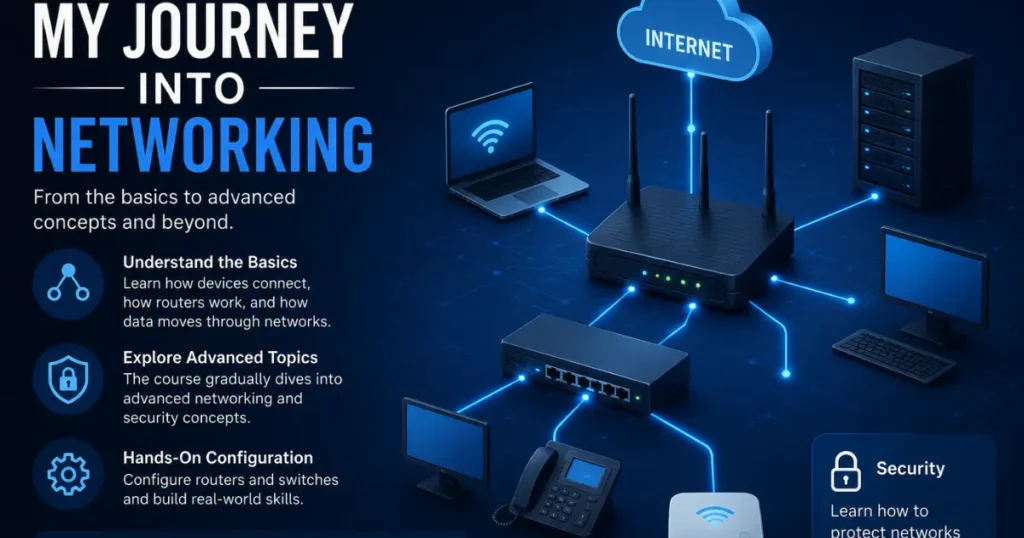
You usually start with networking basics. You learn how devices connect and how data moves across networks.
Then little by little, you start learning more advanced networking and security concepts.
You also learn basic cybersecurity skills that help later in security roles.
Some Common Areas Covered Include:
- Network fundamentals
- TCP/IP protocols
- Configuring routers and switches
- Wireless networking
- Network troubleshooting
- Firewall basics
- VPN technologies
- Security fundamentals
- Server connectivity
This might sound like a lot. But most training institutes break it down step-by-step, so beginners can follow along without feeling overwhelmed.
And the lab sessions matter a lot here.
Because networking is one of those skills you really learn by doing. Watching videos alone is not enough. You need to configure devices, fix errors, test connections, and sometimes completely mess up configurations before things finally click.
That is normal.
Cybersecurity Actually Starts with Networking
A lot of beginners jump directly into cybersecurity because it sounds exciting. Ethical hacking videos on YouTube make everything look cool and fast-paced.
But here is the reality nobody explains properly.
Without networking knowledge, cybersecurity becomes very confusing.
You need to understand how systems communicate before you can secure them. You need to understand how data moves through a network before finding security threats.
This might sound a bit confusing at first, but networking is basically the foundation for cybersecurity.
That is why many cybersecurity professionals first start with networking certifications like CCNA.
Once you understand networking properly, security concepts become much easier to understand later.
Cisco Certifications Still Hold Real Value
Now yes, there are many online certifications available today. Some are useful. Some honestly are not worth much.
But Cisco certifications still have strong industry recognition because companies know Cisco training focuses on real networking skills.
The most popular one is probably the CCNA certification.
It is considered a solid starting point for networking careers.
After that, most people go for advanced certifications based on what they want to learn next.
You Might Also Hear About:
- CCNP
- Cisco CyberOps Associate
These certifications help during interviews because recruiters already recognize them.
But honestly, practical skills still matter more than certificates alone. Certifications help open doors. Your actual knowledge keeps those doors open.
Career Opportunities After Cisco Networking Training
One reason many students choose networking is because the career options are pretty wide.
After completing cisco networking courses, people usually apply for roles like:
- Network Engineer
- Technical Support Engineer
- Network Administrator
- SOC Analyst
- Cybersecurity Analyst
And you do not always need years of experience to start.
Freshers with good practical skills can still find entry-level jobs easily.
The salary growth can also become quite good with experience.
Most people start in junior roles and grow into better opportunities later.
You will notice that networking skills stay useful even when technology keeps changing. Cloud platforms still rely on networking. Cybersecurity still relies on networking. Data centers still rely on networking.
So the core skill stays valuable.
Practical Training Matters More Than Theory
This is something many students realize too late.
Just reading networking concepts is not enough.
If your training is only theory without labs or real practice, learning networking becomes much more difficult.
Good networking institutes usually give more importance to practical learning and real-time practice.
Practical Training Usually Includes:
- Configure routers
- Create VLANs
- Practice subnetting
- Troubleshoot live network issues
- Set up security rules
- Work on mini projects
Hands-on practice builds confidence quickly.
Companies want candidates who can solve problems, not just memorize theory.
Final Thoughts
Almost every business today depends on cybersecurity and networking.
And honestly, this field still has huge growth potential.
If you are looking for a career that offers strong demand, long-term growth, and practical learning opportunities, then cisco networking courses can be a really good starting point.
The best part is you do not need to become an expert overnight. Start with the basics, practice consistently, and slowly build your skills step-by-step.
That is usually how most successful networking professionals begin anyway.